Spirit Tree
Spirit Tree
Generation
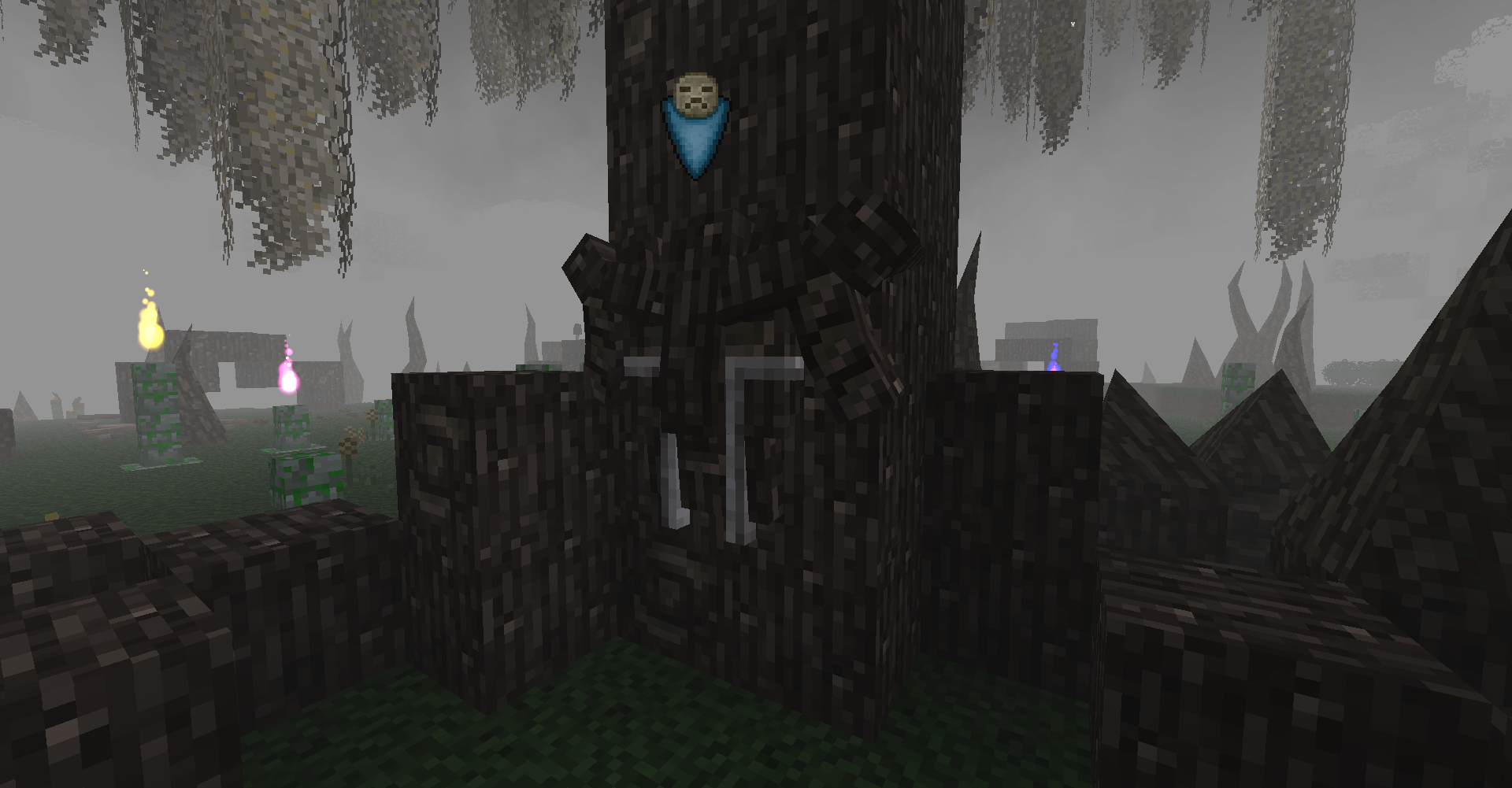
The Large Face of the tree
Spirit Trees are unique boss-like trees. They feature a dense, drooping canopy, a thick trunk etched with carvings, and huge roots that jut out into the surrounding area. The trunk is surrounded by small stone pedestals, occasionally topped with Wisps.
The Spirit Tree contains multiple sentient, hostile Small Spirit Tree Face mobs, and a single Large Spirit Tree Face that acts as the primary boss.
The Spirit Tree has a world location that identifies the area it takes up, as well as a title that appear briefly to players who approach it. While in the location, the surrounding area will be covered in a light fog, and ambient sounds will fade away.
Most of the blocks of the Spirit Tree and its surroundings are protected from destruction by a ward that persists until the Large Spirit Tree Face is defeated. The tree also has varying levels of difficulty and rewards depending on the number of Wisps on the pedestals surrounding it.
Contents
Generation & Spawning
One Spirit Tree will always generate in the center of the Swamplands Clearing sub-biome. The Small Spirit Tree Faces continually spawn on the roots of the tree, while the Large Spirit Tree Face spawns on the main trunk.
Composition
Spirit Trees consist of:
Behavior
Spirit Tree Face
Health
Damage
Drops
Experience
Both Small and Large Faces take additional damage when hit with an Axe, but are unsusceptible to Lava or drowning.
Small Spirit Tree Face
Small Spirit Tree Faces act as supporting sentries, and spawn on both the main trunk and the surrounding roots of the tree. They have a couple variants with slightly different appearances. They can disappear and reappear on any side of a connected Spirit Tree Log, often doing so to reach a position where they can target the player. Their eyes and mouth glow before shooting Sap Spit projectiles at players nearby, even if they are too far away to hit. If killed, they will respawn after a while as long as the Large Spirit Tree Face remains alive.
If the block a Small Spirit Tree Face is on is somehow removed, or if it otherwise ends up in an invalid position, it will drop to the ground and attempt to teleport to a nearby Spirit Tree Log.
Large Spirit Tree Face
The Large Spirit Tree Face is the main boss, and can be found on the tree’s trunk, occasionally disappearing and reappearing on other sides of it. It has a high amount of health and uses the same Sap Spit attack as the smaller faces, on top of three additional attacks:
Effects of Wisps
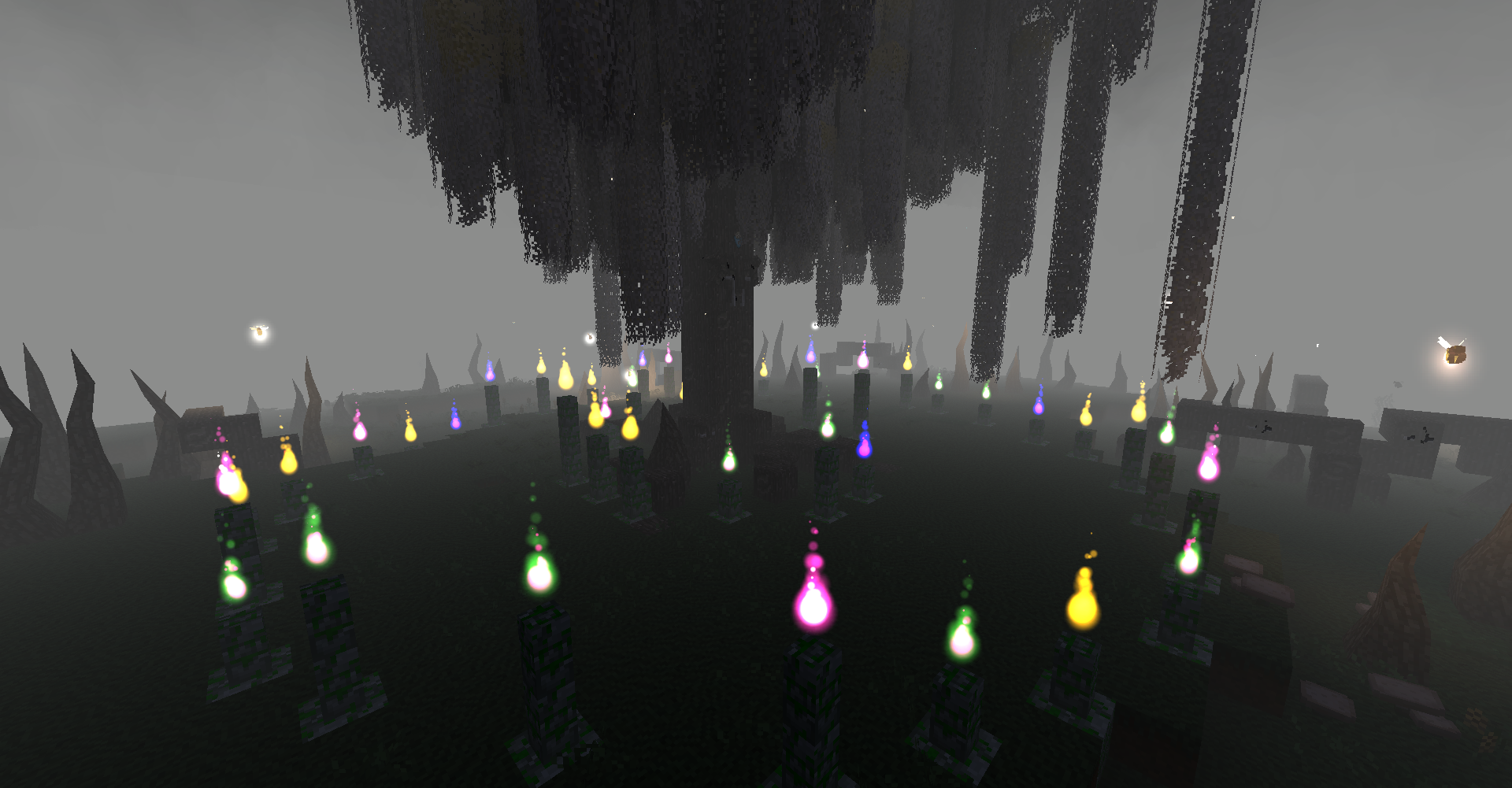
A Spirit Tree with maximum Wisps
The number of Wisps on the pedestals surrounding the Spirit Tree affect the difficulty of its attacks, as well as the amount and types of loot that will be obtained upon its defeat.
This system is determined by a «wisp strength» value that starts at 1.0 with the default wisp number generated with every Spirit Tree, and fluctuates based on wisps added or removed. The change is not immediate, but rather a gradual shift over the course of the fight, so it is not possible to fight the tree at a lower wisp value and then change it to a higher value at the last moment to exploit the rewards.
The current wisp strength value is denoted visually by the glow colour of the Spirit Tree Faces.
Removing Wisps
Adding Wisps
Strategy
The Spirit Tree uses a large number of attacks that can be overwhelming at first. Ranged combat is the safest for dodging projectiles and roots, but Axes also deal considerable melee damage if the player can get close, especially an Octine Axe due to its additional fire damage. Having a Shield is also useful to block the tree’s constant projectiles.
Covering the roots surrounding the tree with blocks can also be a viable way to avoid the Small Faces’ attacks while attacking the Large Face. As the Large Face will not despawn nor regenerate health, players who find themselves unequipped for the fight can always flee and return later.
Aftermath
Upon defeating the Large Spirit Tree Face, the Tree’s block protection ward will disappear, new Small Faces will stop spawning, and the tree and the area around it will start to decay.
Several blocks of Spreading Sludgy Dirt will spawn around the Tree’s base, and several Spreading Rotten Bark blocks will replace some of the Spirit Tree Logs, appearing both in the base of the tree and on its surrounding roots. These blocks will slowly convert neighbouring Swamp Grass and Spirit Tree Logs into themselves, spreading across the Tree and the surrounding area.
As Rotten Bark spreads to the branches, the Spirit Tree Leaves will begin to break, occasionally dropping Spirit Fruit. Any of the Clearing’s ground cover plants will also turn into Dead Weedwood Bushes as their supporting grass block decays.
If left unchecked, the decay will spread until it has consumed the entire Swamplands Clearing sub-biome, essentially turning it into a miniature Sludge Plains biome that is capable of spawning Sludges and Smol Sludges. However, this can be prevented if the spreading blocks are removed or isolated quickly enough before they can expand out of control.
Once the Large Face has been defeated, the Spirit Tree’s icon on an Amate Map will be accompanied by a check mark.
Growing
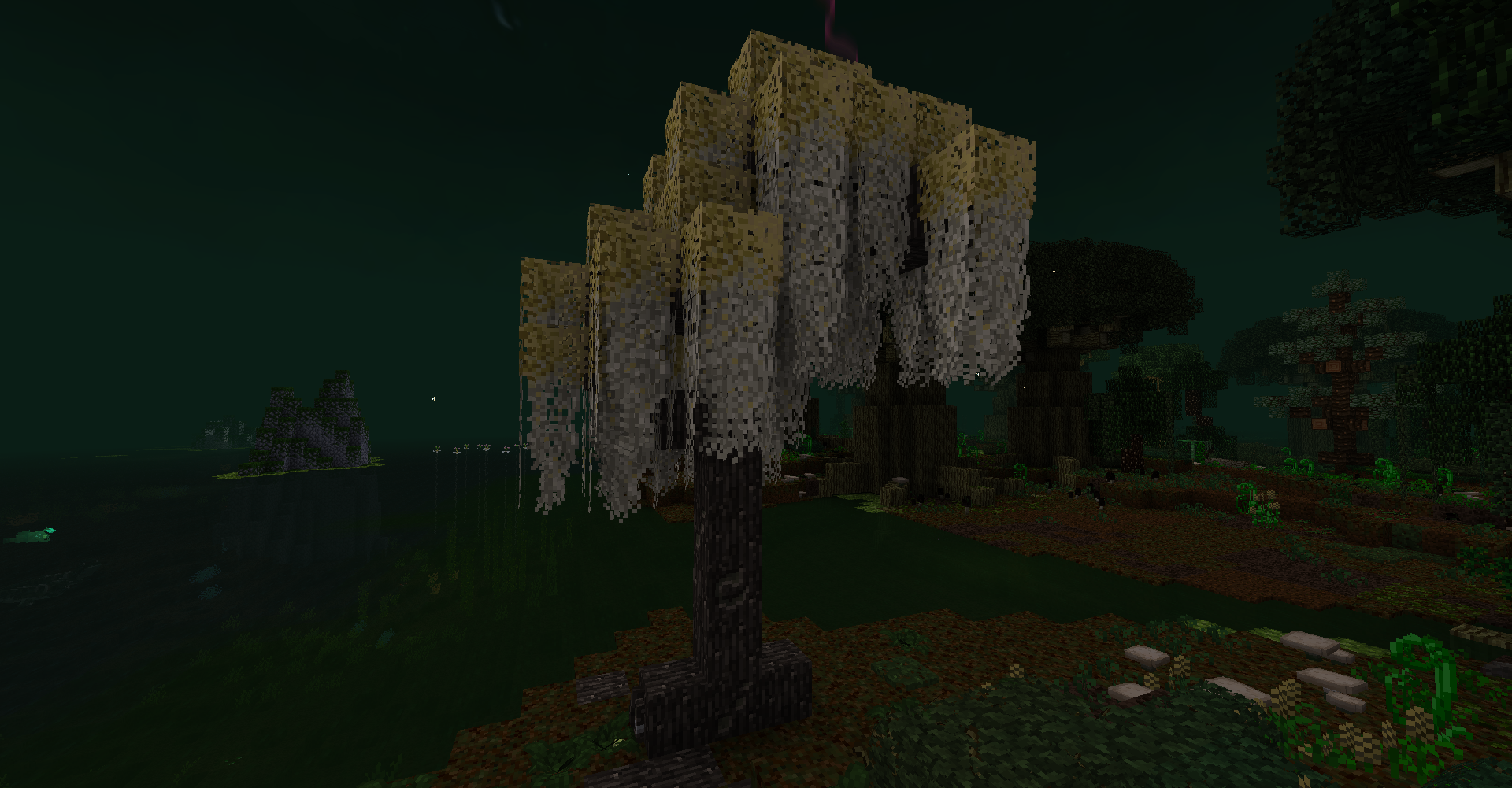
The small friendly tree grown from saplings
While natural Spirit Trees cannot be grown, smaller, friendlier versions can be grown from Spirit Tree Saplings. These smaller trees consist purely of the log and leaf blocks and are inhabited by a single, friendly Small Spirit Tree Face. This Face has almost the same stats and behavior as the hostile ones, but will attack nearby hostile mobs instead of the player, albeit at a lesser range. The face can connect to Spirit Tree Logs added to its tree to extend its range, making an effective sentry. Friendly Small Spirit Tree Faces can also be fed by right-clicking them with Compost, healing them by 4 health ( ) and occasionally causing them to drop 1-3 Sap Spit.
Friendly Small Spirit Tree Faces can be given Amulets, giving them a Middle Gem Circle modifier that directly affects the face’s own attacks and the player they are assigned to while they are alive. The number of amulets that they can equip at once can be extended with an Amulet Slot, and amulets can be taken off of them by shift right-clicking them. (NOTE: Amulet Slot extension for this mob is intended but not yet implemented.)
Spirit Trees grown from saplings do not appear with a map icon on an Amate Map.
Drops
The drops from Small and Large Spirit Tree Faces are derived from two loot tables: spirit_tree_face_small and spirit_tree_face_large, respectively. On top of that, Spirit Fruit can also be dropped from the tree’s leaves when broken.
The following is a list of all of the items that can be dropped by Small and Large Spirit Tree Faces, including their rolls, quantities, and weights.
spirit_tree_face_small
| Small Spirit Tree Face Drops | ||
|---|---|---|
| Dropped Item | Quantity | Weight |
| 1 Roll: | ||
| Nothing | N/A | 2/3 (66.67%) |
 Sap Spit Sap Spit | 1 (+0-1 per Looting level) | 1/3 (33.33%) |
| 1 Roll: | ||
| Nothing | N/A | 8/9 (88.89%) |
 Small Spirit Tree Face Mask Small Spirit Tree Face Mask | 1 | 1/9 (11.11%) |
spirit_tree_face_large
| Large Spirit Tree Face Drops | ||
|---|---|---|
| Dropped Item | Quantity | Weight |
| 1 Roll: | ||
 Bark Amulet Bark Amulet | 1 | 1/1 (100%) |
| 1 Roll, if at 1.4 Wisp strength or higher: | ||
 Large Spirit Tree Face Mask Large Spirit Tree Face Mask | 1 | 1/1 (100%) |
| 1 Roll: | ||
 Spirit Tree Sapling Spirit Tree Sapling | 1 | 1/1 (100%) |
| 1 Roll, if at 1.2 Wisp strength or higher: | ||
| Nothing | N/A | 5/6 (83.33%) |
| Spirit Tree Sapling | 1 | 1/6 (16.67%) |
| 1 Roll, if at 1.4 Wisp strength or higher: | ||
| Nothing | N/A | 4/5 (80%) |
| Spirit Tree Sapling | 1 | 1/5 (20%) |
| 1 Roll, if at 1.6 Wisp strength or higher: | ||
| Nothing | N/A | 3/4 (75%) |
| Spirit Tree Sapling | 1 | 1/4 (25%) |
| 1 Roll, if at 1.8 Wisp strength or higher: | ||
| Nothing | N/A | 2/3 (66.67%) |
| Spirit Tree Sapling | 1 | 1/3 (33.33%) |
| 1 Roll, if at 1.95 Wisp strength or higher: | ||
| Nothing | N/A | 1/2 (50%) |
| Spirit Tree Sapling | 1 | 1/2 (50%) |
Visit the Loot Tables page for more information on loot.
Giant Weedwood Tree
(Not to be confused with the normal Weedwood Tree or the Rotten Weedwood Tree)
Giant Weedwood Tree
Generation
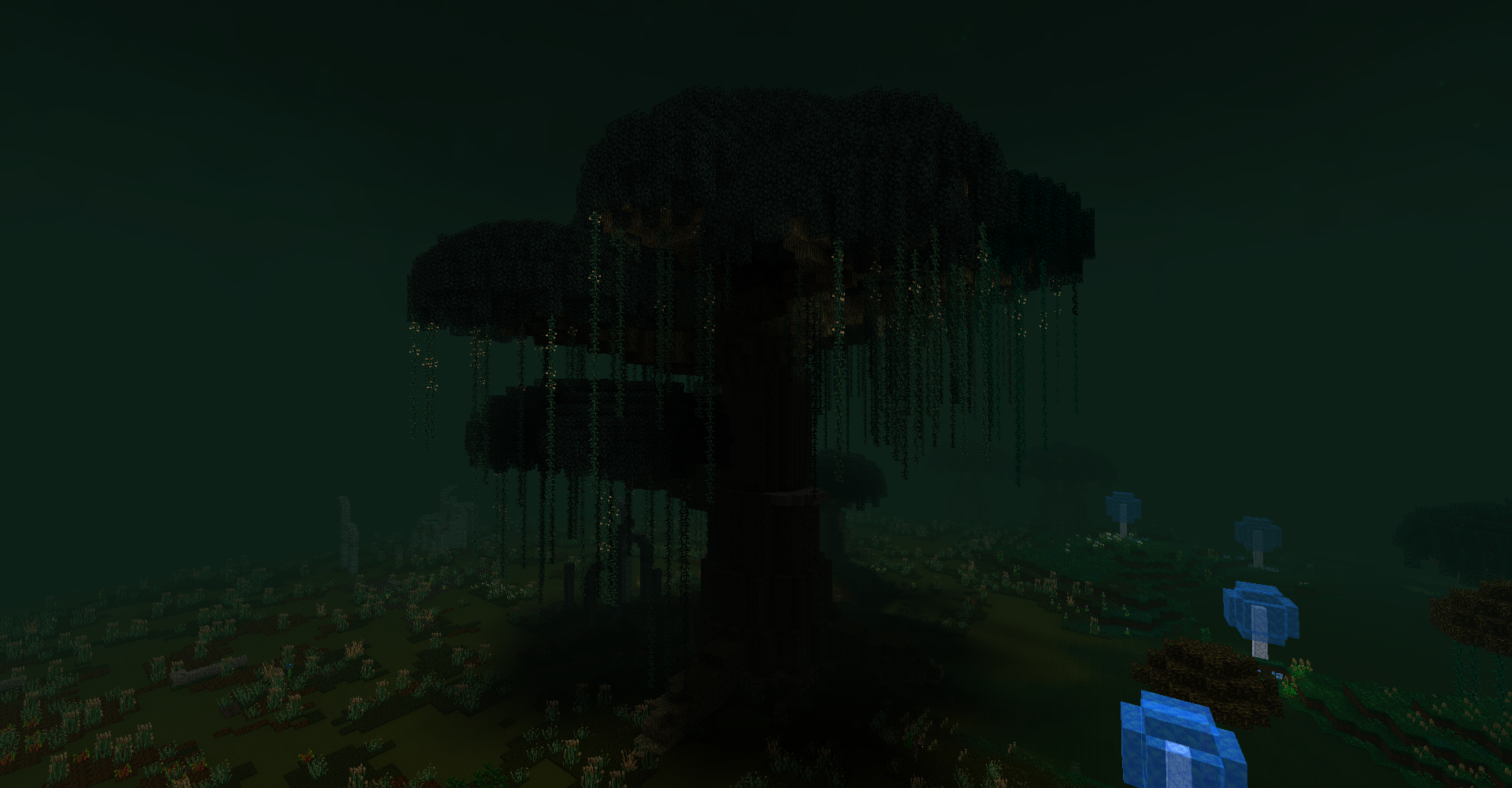
A Giant Weedwood Tree in a Marsh biome

Underneath the canopy of a Giant Weedwood Tree
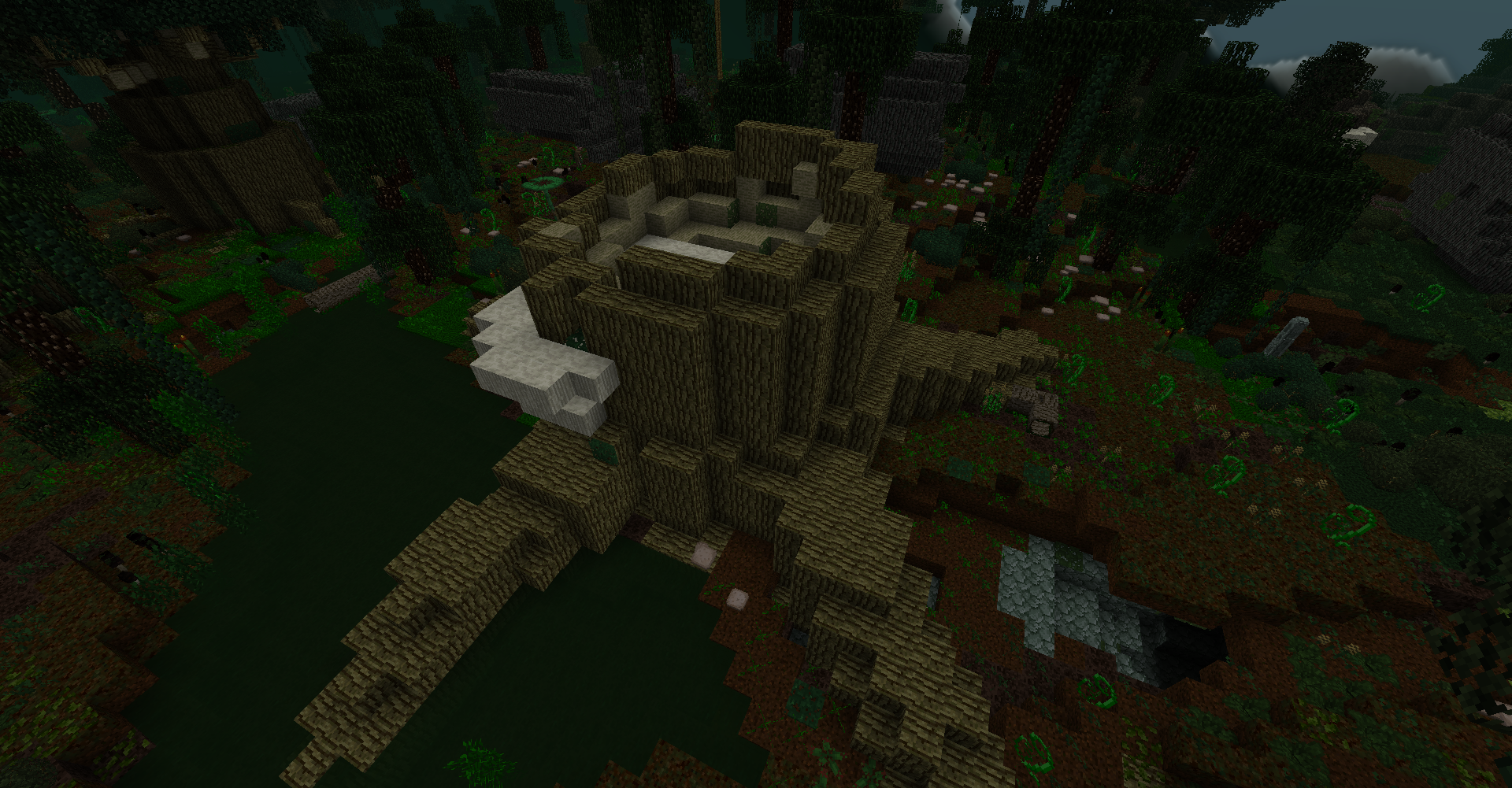
A Giant Weedwood Tree «stump» in a Swamplands biome
Giant Weedwood Trees are massive trees found in The Betweenlands. They generate uncommonly in Swamplands, Coarse Islands, and Marsh biomes, but cannot be grown, not even with Weedwood Saplings.
Giant Weedwood Trees have a world location that identifies the area they take up.
Contents
Description
Around 60 blocks tall and around 70 blocks wide, Giant Weedwood Trees feature a massive trunk with large supporting roots and branches. Each has multiple wide, bushy clusters of leaves that make up their sprawling canopy, drooped with Hangers. They are so large that they significantly darken the area beneath them.
In Swamplands biomes, Giant Weedwood Trees are usually cut off from the base, leaving only a large stump behind, with no leaves, Hangers, or a world location. Unlike whole trees, they are also often covered in Poison Ivy. Only whole Giant Weedwood Trees will appear with a map icon on an Amate Map.
Even moreso than regular Weedwood Trees, Giant Weedwood Trees are a great source of wood. They are also the main sources of Dentrothyst, a resource used extensively in Herblore, and the only source of Seeded Hangers, which drop White Pear Seeds used to grow White Pear plants.
Composition
Giant Weedwood Trees consist of:
Pyrads occasionally spawn on and around living Giant Weedwood Trees. Sporelings can also spawn on the Shelf Fungus found around the trunks.
Это темное, болотистое царство, заполненное чудовищными существами.
Как попасть в The Betweenlands? 
Воздух здесь настолько неприятен, что любое существо, дышащее, медленно разлагается. В болотистом царстве нет дневного / ночного цикла. Часы, карты, красный камень, зажигалки, а также компасы бесполезны здесь. Из-за теплой и влажной среды The Betweenlands, еда из других измерений гниет при путешествии через портал в это измерение, становясь гнилой пищей.
Поскольку зажигалки не могут работать в измерении, существует альтернативный способ создания огня. Просто используйте правой кнопкой мыши Moss, Cave Moss или Thorns (либо помещены, либо брошены, как в блоке, так и в форме предметов) с Октиновым слитком, чтобы он загорелся. Слиток заставит растение медленно нарастить пламя, пока оно не превратится в огневой блок, не потребляя слиток в процессе. Это необходимо для запуска Infuser`а.
Факелы здесь не работают, и вместо этого вам понадобятся Sulphur Torches. Наряду с этим инструменты из других измерений будут уменьшаться по эффективности в Межстранах, что побуждает игрока использовать инструменты «Межобласти». Однако инструменты Interlands в вашем инвентаре будут подвергаться коррозии.
Мод на стадии беты,возможны баги.
[Господи зачем я это сюда добавил?
Farming
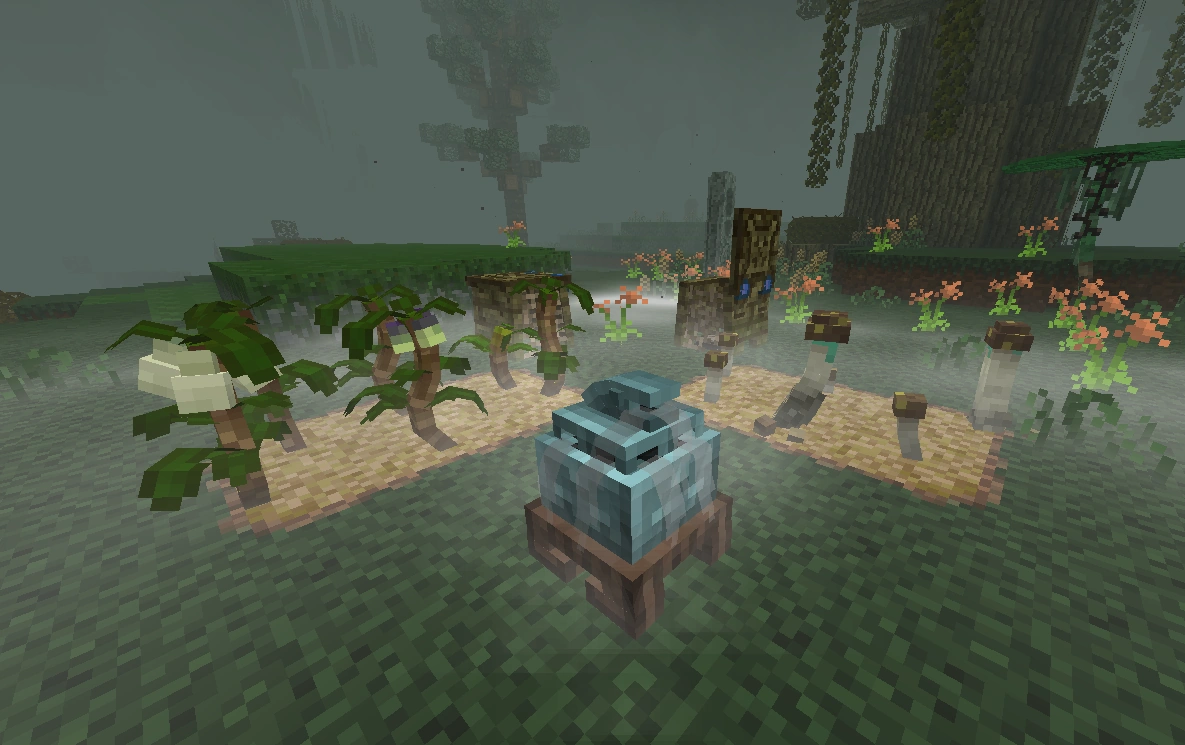
Various crops, and a Bottled Fog-filled Censer.
Farming in The Betweenlands is different from farming in the Overworld, requiring extra work and attention to produce a successful harvest.
Contents
Process
Instead of vanilla Minecraft’s tilled farmland, most Betweenlands plants are grown in Dug Soil (Dug Swamp Dirt, Dug Swamp Grass, Dug Purified Swamp Dirt, or Dug Purified Swamp Grass) that has been filled with Compost. Plants also do not require nearby water to grow, nor can they be trampled by players or mobs.
Dug Soil can be created by right-clicking Swamp Dirt, Swamp Grass, or their Purified variants with a Betweenlands shovel. They can then be right-clicked with a Compost item to fill them with Compost, after which the plant can be planted on top. Compost is created by composting plant based items in the Compost Bin.
After 3 harvests, the Compost will be depleted. If it is not refilled, the Dug Soil will eventually revert to it’s un-dug variant.
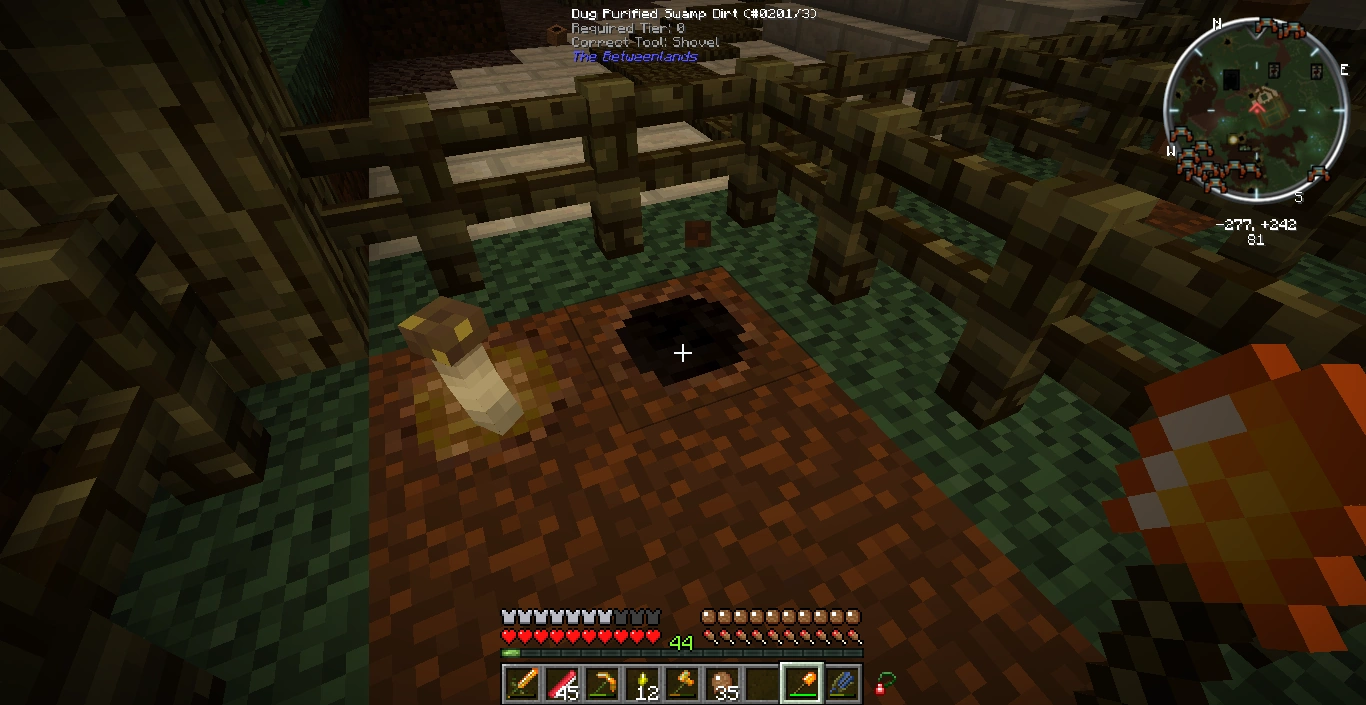
Shovels make holes, which can then be filled with compost.
Speeding up Growth
As Bone Meal does not work in the dimension, Ground Dried Swamp Reed, made by grinding Dried Swamp Reed in a Mortar, can be used in its place for the same effect. Although this can only be used to speed up crop growth, and not the other farmable plants.
A Censer filled with Bottled Fog can also be used to speed up plant growth in the area around it.
Types of Plants
There are 4 main types of Farmable plants in The Betweenlands: crops with multiple growth stages, basic plants, Sludgeon plants, and plants that do not require Compost.
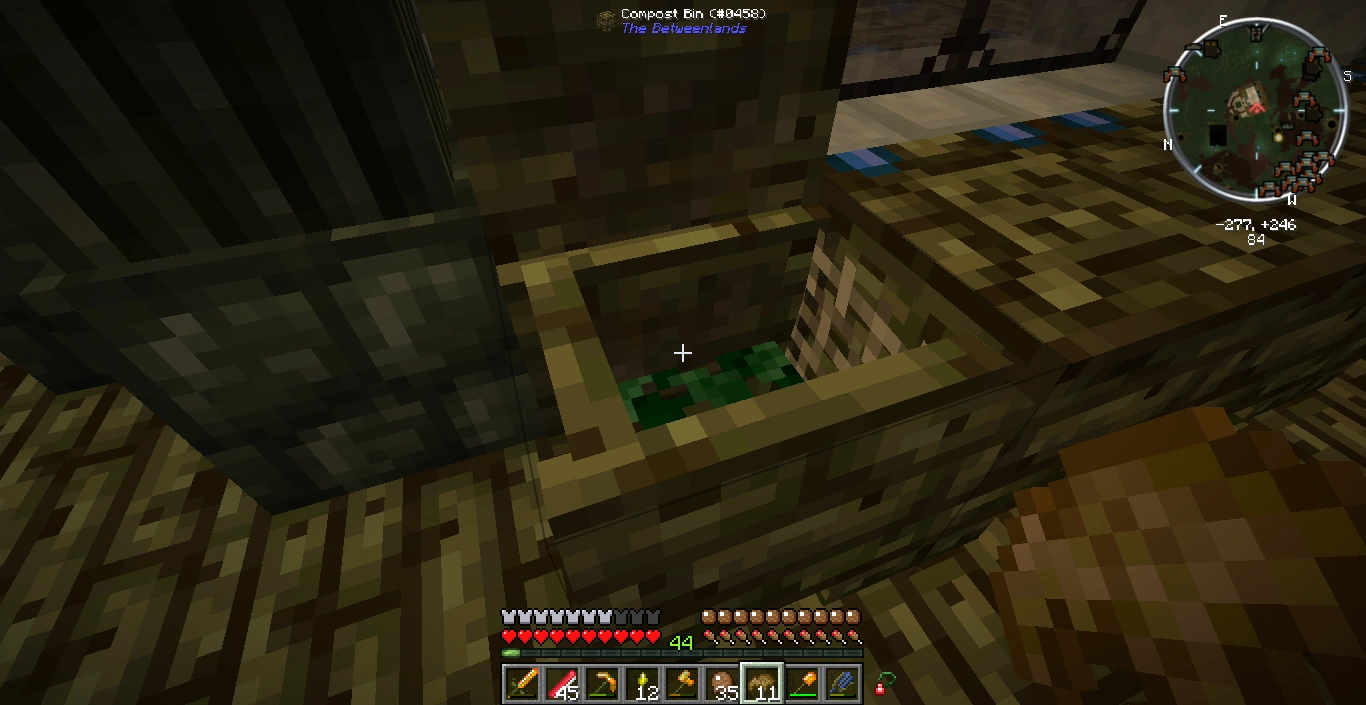
A Compost Bin, filled with plants.
Crops
Crops each have multiple growth stages, maturing over time much like vanilla plants.
Weeping Blues, growing from the one on the Compost-filled block.
Basic Plants
Basic Plants can be farmed by placing the plant (harvested with Syrmorite Shears) on top of Compost-filled Dug Soil. The plant will then begin to spread to nearby plant-supporting blocks around it in a 3×3 area, provided there is space for them. Like crops, the compost will eventually be depleted, although unlike them, basic plants won’t pop off of unfilled soil.
Some of these plants must also be grown partially or fully submerged in water, such as Marsh Marigold or Mire Coral. To do this, simply place the Dug Soil underwater, and the plants will grow otherwise normally.
Sludgeon Plants
Sludgeon plants grow similarly to basic plants, but will only grow near a Censer filled with Bottled Fog.
Plants that Don’t Require Compost
Several plants such as Hangers, Poison Ivy, Moss, Cave Moss, Thorns, Lichen, Swamp Reed, and Swamp Kelp do not require compost to grow, and will simply spread on their own.
Swamp Reed can be grown both in or on a block directly adjacent to water, but will grow faster, and taller, when underwater. (For more details, see Swamp Reed)
Hazards
Betweenlands Farms face multiple hazards, which can damage or completely destroy the farm if not properly managed.
The Heavy Rain weather event will gradually cover the ground in Puddles. If these Puddles generate over a crop-type plant, they will instantly destroy them. However, Puddles cannot generate over the other plant types, so they are unaffected. Puddles will only generate on top of opaque blocks exposed to the sky, but can also spread to empty neighbouring blocks on the same level as them. To prevent this, players can cover their farms, and surround them with a «wall» of blocks that Puddles cannot spread past.
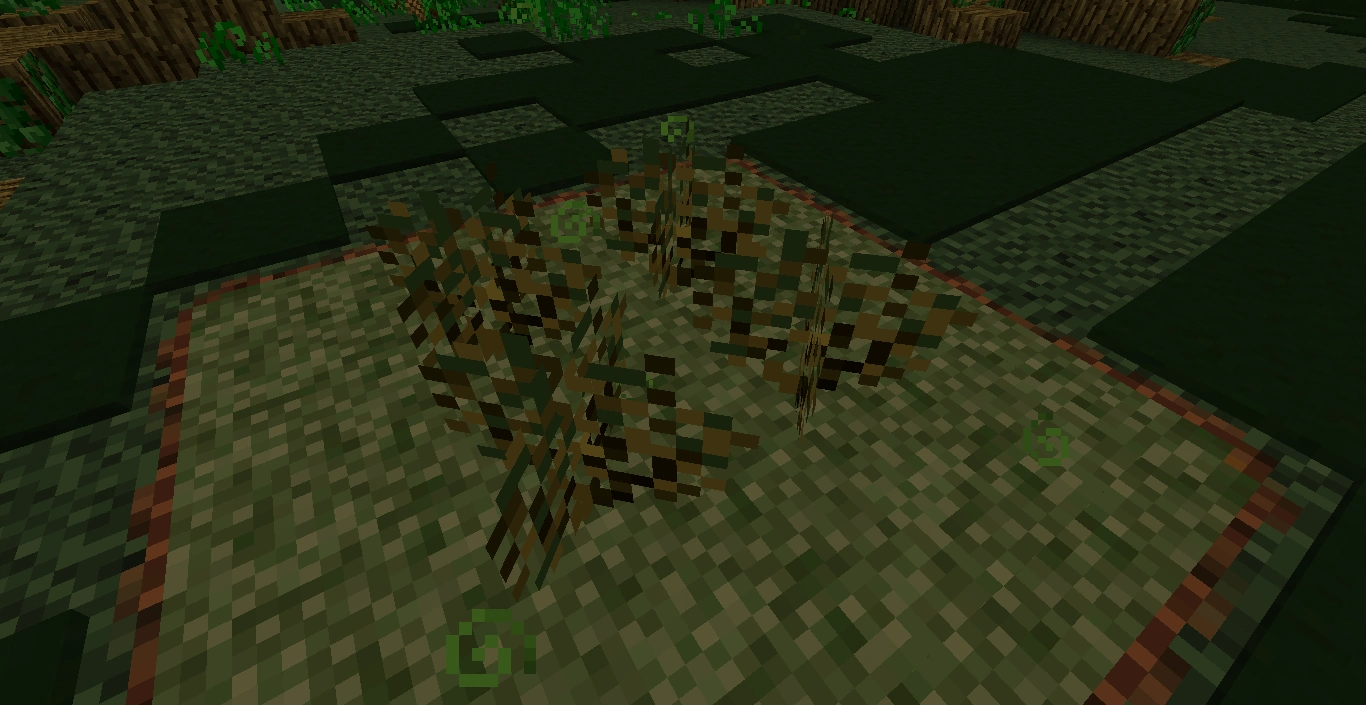
Bushes on Decayed soil. (Pic Outdated)
Decay
Dug, Compost-filled soil will randomly decay over time, turning a sickly green, visually decaying crops planted in it, and halting any plant growth. This decay can also spread to other nearby unpurified Compost-filled blocks. If the plant is left on a decayed block for too long, it will eventually be destroyed, also destroying any basic plants in a 3×3 area around it.
Decay can be temporarily cured by right clicking the soil with a Plant Tonic, which will remove any decay in a small area. Plant Tonic can also be placed in a Censer to cure and prevent any decay in the area around it. Purified Swamp Dirt will also never decay, completely bypassing the mechanic.
Aspects
Aspects are a mechanic used in Herblore. They are semi-magical properties found in plants, minerals and even pieces of creatures. They are the key to brewing Infusions.
Contents
Where Aspects Are Found
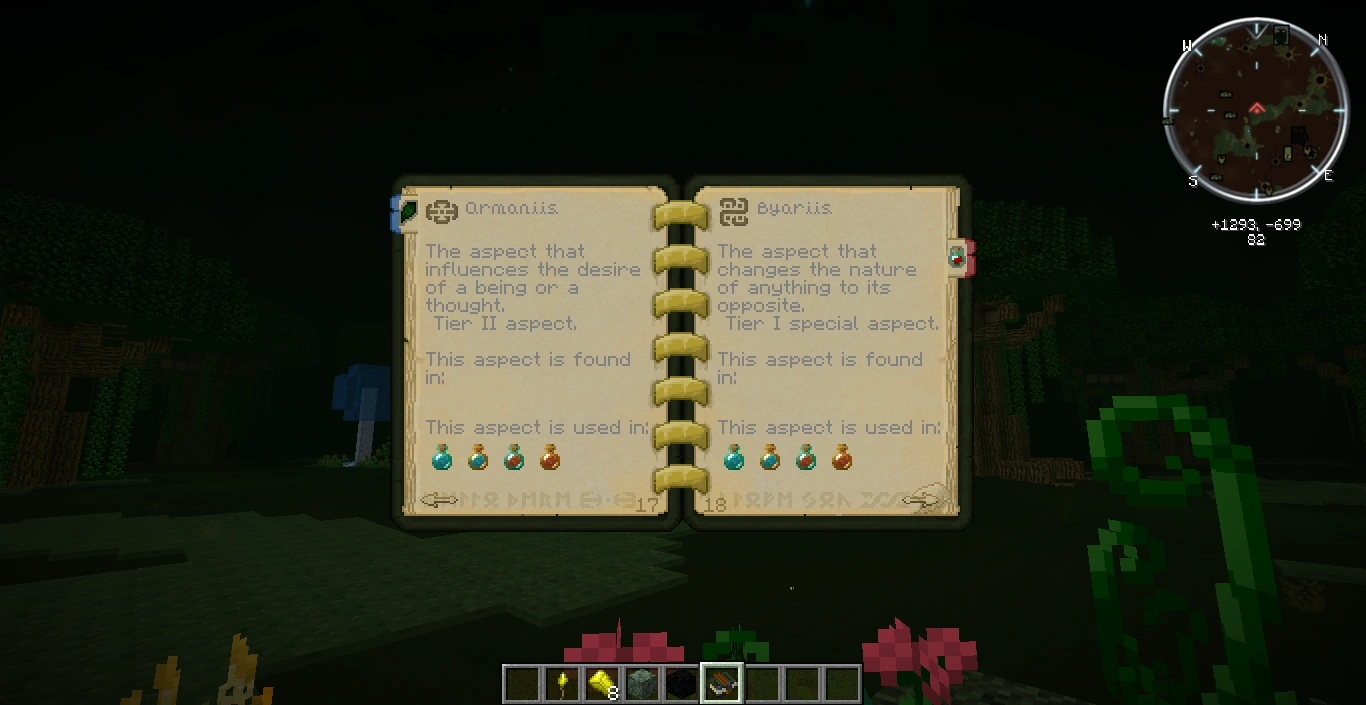
Aspects as listed inside the Herblore Book
Aspects are randomly distributed to Ground Items, including Ground Dried Swamp Reed, among tiers and groups. The distribution depends on the world seed. Aspects themselves don’t have a defined effect, only a classification of what they could affect. Aspects always have the same classification. This does not depend on the world seed. The aspect/s on an item, if they have been discovered and if an Herblore Book is in the inventory, can be viewed by mousing over it in your inventory while holding shift, which will also display its icon. Lower tier aspect items often have multiple low tier aspects while higher tier aspect items usually have a single high tier aspect.
Some Ground Items have exceptions to the usual distribution rule:
A single aspect is also always found on an Aspect Vial, a player-created aspect item that can be used alternatively to ground items in brewing infusions. Each item an Aspect is found on has a specific decimal amount; the amounts are added if an infused aspect is combined from two separate items, determining the number of Infusions that can be obtained from that one bucket.
A single aspect can be farmed from an Aspectrus Plant by planting it near an active Censer that is being sourced with an Aspect Vial containing the aspect you wish to farm. The same aspect can be found on the Aspectrus Fruit and Seeds that plant drops; Aspectrus Fruit can be used as another infusion-brewing alternative.
A final item that can contain aspects is Sap Spit, which is obtained from Spirit Trees. This item is unique in that it always contains just the aspects Ordaniis and Yeowynn, regardless of the world. These are the exact aspects needed to create an Elixir of Healing. However, like Ground Items, the aspects will still not be displayed on the item until it is tested.
Aspects can be stored within Aspect Vials as well as placed Dentrothyst Vials. Placed vials act as containers that can be filled with Aspect Vials to store up to 5.0 amount of a single Aspect.
Making Use of Aspects
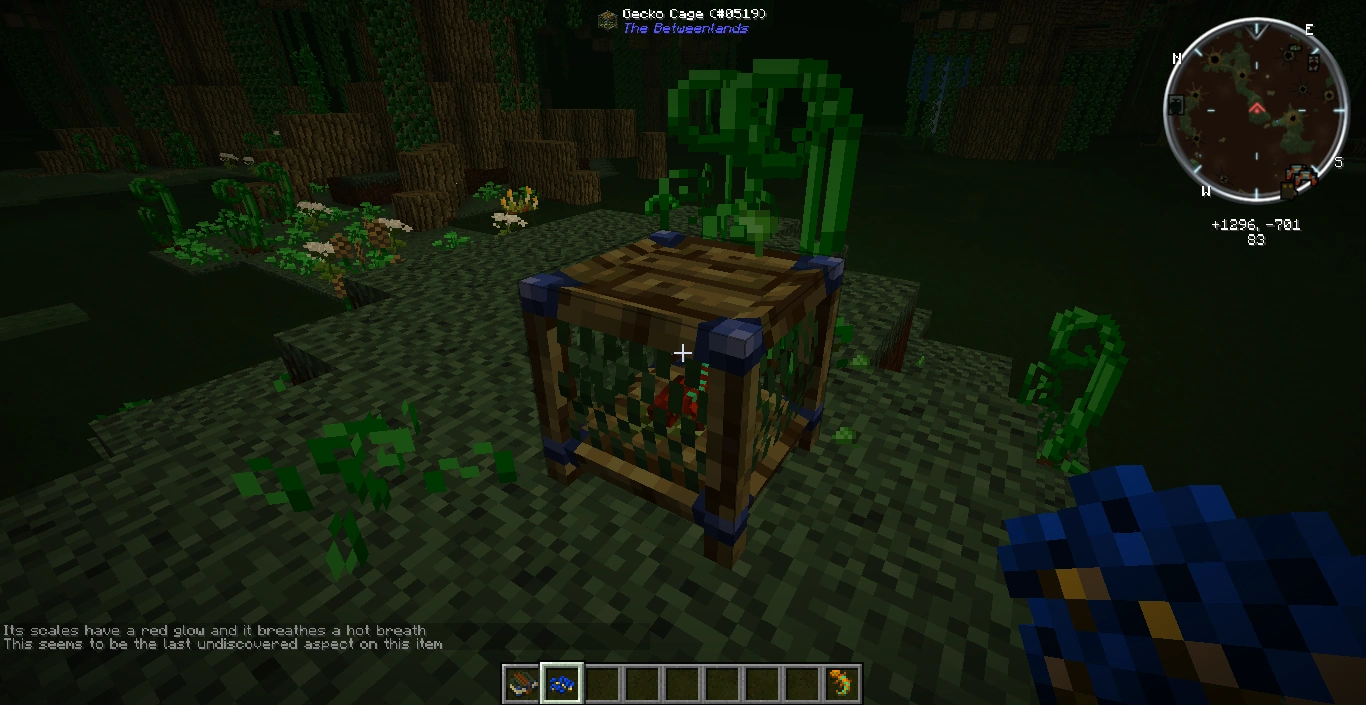
Aspects must be first discovered on items through a test. Aspects have a certain effect (derived from previously mentioned classifications) on Geckos, e.g. nausea, sweat etc. (this is only for the gecko test, it does NOT affect the potion effect in the end). Geckos can be tested by right-clicking a Gecko Cage (that has a Gecko inside) with the Ground Item you wish to test. Doing the gecko test may change the appearance of the Gecko based on the general theme of the aspect tested, or display particle effects; It will also display a message in text telling one of the aspects on the item, and gives the Herblore Book an entry with the found effects and their corresponding aspects that caused it (and the strength of the occurred effects, hinting at the amount of the corresponding aspect). It may also display a second message to say that all aspects on the item have been discovered. From then on, you will be able to view the aspect on the item with the shift key when the Herblore Book is in the inventory.
Certain combinations of aspects yield functioning Infusions in the Alembic, while some don’t. Infusing any non-valid combination of aspects (or infusing a combination and collecting it at the incorrect time) and putting the resulting Infusion Bucket in the Alembic will yield Aspect Vials containing individual aspects. These vials can be used in the Infuser as aspect ingredients but are not actual infusions; this serves as a way of separating aspects from a single item that contains multiple. The decimal amount in the aspects is added up and may determine the length or potency of the resulting Infusion, depending on the aspect type; Aspect Vials used in crafting require a specified amount.
The aspect Byariis (corruption) creates the negative counterpart of an infusion if it’s in the brew. Even numbers of ingredients with Byariis cause the outcome to have a positive effect, while odd numbers cause the outcome to have a negative effect. The amount of Byariis doesn’t affect the outcome; only the presence matters.
Aspects in Infusion Buckets and Aspect Vials have a specified amount, shown in their tooltip; the resulting number of infusions depends on the sum of all amounts of the mixed aspects. Strength and duration are affected by the amount of two aspects for strength and duration. Which aspects affect duration and/or strength depends on the infusion recipe. Normal infusions have a fixed recipe that doesn’t depend on the world seed. Which aspects affect strength and/or duration of the infusion is mentioned in the potion recipe. Special infusions have a random recipe that depends on the world seed. Recipes for said special infusions can be found as loot and will add an Herblore entry when read.
Types of Aspects
These are all of the Aspects categorized alphabetically, their tier (which determines the general types of ground items they can be found on and in what quantity aspects can be found on an individual item), and what Infusions they can be made into. See the Infusions page for the specific combinations of Aspects required to make each Infusion.